
Easy Homemade Pate a Pizza Dough Recipe for Blistered Crust
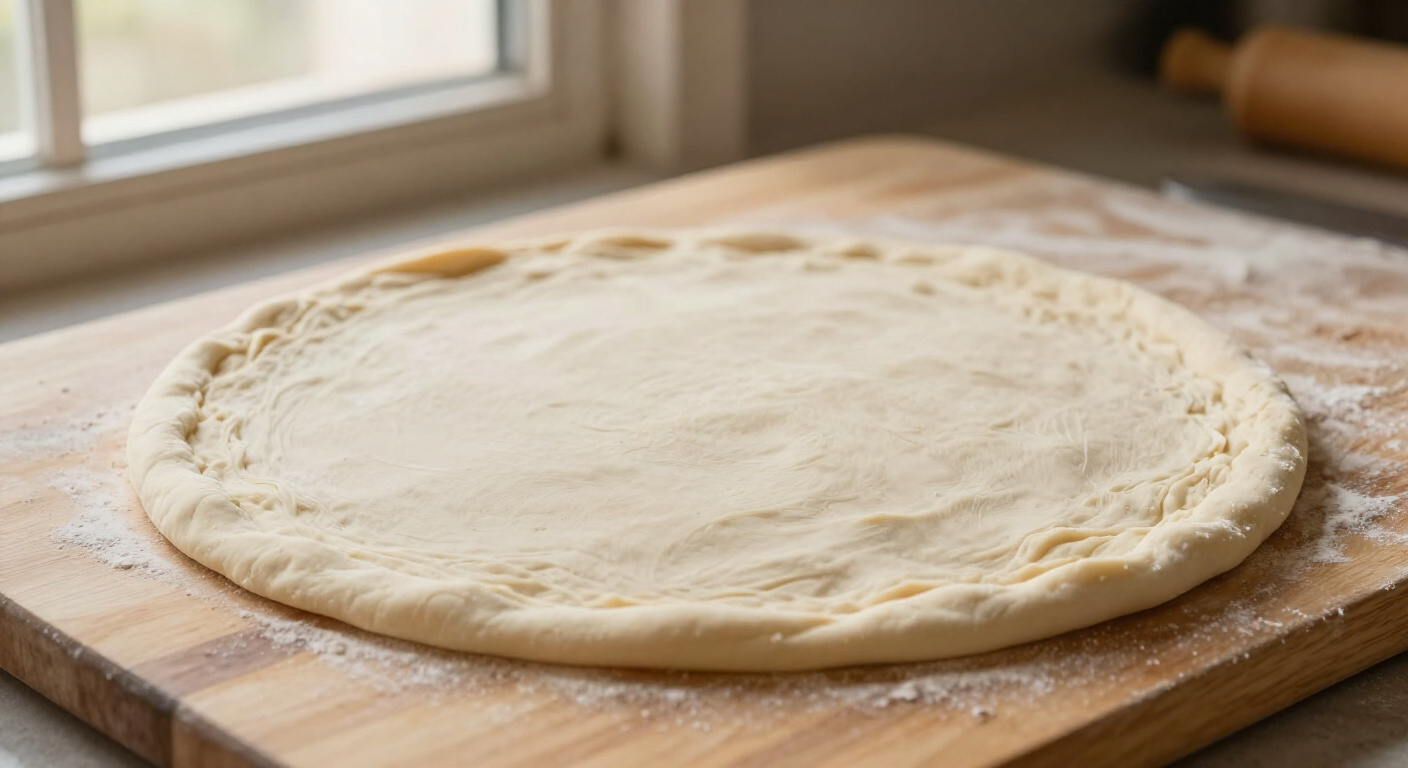
Pate a pizza that blisters and puffs in 100 minutes, with a golden, crisp crust you can make at home. Get the easy recipe and bake tonight.
Pate a pizza that puffs and blisters in a hot oven, golden and loud, ready in 100 minutes. Stubborn at first, it's the dough I still make every Friday by the fire.
Water near 40°C wakes instant yeast gently, so the dough rises steadily instead of racing ahead and tearing. Too hot, and the yeast can die before it does its job.
Ingredients You'll Need
All-Purpose Flour: This is the backbone of the dough, the structure that holds every bubble. Measure it by weight, since packed cups can make the dough stiff. Bread flour is a good swap for a chewier, more blistered crust.
Instant Yeast: These tiny granules wake up fast and lift the dough without a separate proofing step. Keep the packet sealed and fresh, because tired yeast barely lifts anything. Active dry yeast works too: dissolve it in the warm water first and let it sit five minutes.
Granulated Sugar: A little sugar feeds the yeast and helps the crust turn a gentle golden. It won't make the dough sweet, just lively. Honey works as a substitute, using the same amount.
Fine Salt: Salt tightens the gluten and keeps the yeast from running wild. Without it, the dough tastes flat and bland. Kosher salt can stand in, but weigh it, since its coarser flakes measure lighter by the spoon.
Extra-Virgin Olive Oil: A few tablespoons make the dough supple and easy to stretch, and add a fruity note. It also keeps the dough from sticking as you work it. A neutral oil like sunflower works if that's what you have.
Warm Water: This hydrates the flour and wakes the yeast. Aim for about 40°C (105°F), warm to the touch but never hot. There's no true swap, though lukewarm milk gives a softer, slightly richer crumb.


How to Make It (Step by Step)
Mix, knead, rise, punch down and stretch, all in one bowl and on one floured board. The dough starts stubborn and tacky, then turns silky and springy under your hands.

- Whisk the flour, instant yeast, sugar and fine salt in a large bowl until evenly blended and pale, about 1 minute at room temperature (68°F / 20°C).

- Pour in the warm water and olive oil, then stir with a wooden spoon until a shaggy dough forms and every bit is moistened, 1-2 minutes at room temperature (75°F / 24°C).

- Knead on a lightly floured surface until smooth and elastic, springing back when pressed, 8-10 minutes at room temperature (75°F / 24°C).

- Shape the dough into a ball, place it in a lightly oiled bowl, and cover until doubled and puffy, 60-75 minutes at 75°F / 24°C.

- Punch the risen dough down until it deflates into a soft, smooth ball, about 1 minute at room temperature (75°F / 24°C).

- Stretch the dough by hand into a thin round on a floured board until it feels supple and holds its shape, 3-5 minutes at room temperature (75°F / 24°C).

Recipe Notes
• Storage: Wrap the risen dough balls in oiled plastic and keep them in the fridge for up to two days. Freeze them for up to three months, then thaw overnight in the fridge.
• Key substitution: No instant yeast? Use about 9 g active dry yeast, stirred into the warm water first. Wait five minutes until it turns foamy and fragrant.
• Make-ahead tip: Mix and shape the dough, then let it rise slowly in the fridge overnight, up to 24 hours. Cold rises give deeper flavor and easier handling. Bring it out an hour before stretching.
• Common mistake: Adding extra flour every time the dough feels sticky. Too much flour makes the crumb dense and chewy instead of airy. Keep it tacky, and dust your hands and board lightly.
Serving size: 1 portion · Calories: 260 · Total Fat: 8g · Saturated Fat: 1g · Carbs: 41g · Fiber: 2g · Sugar: 1g · Protein: 7g · Sodium: 590mg
Tips and Tricks
- Equipment: Use a large, lightly oiled bowl. Give the dough room to double. A wide bowl lets the ball puff evenly instead of squeezing and tearing as it rises.

- Temperature precision: Hold the rise at 75°F / 24°C. Cooler kitchens slow the rise well past 75 minutes. Find a warm corner, and check the dough at the 60-minute mark.
- Common mistake: Rolling the dough with a pin. A pin squeezes out the air you built during the rise. Stretch it by hand instead, so the crust stays airy and blisters in the oven.
- Flavour upgrade: Brush the rim with olive oil. Before baking, a light brush of extra-virgin olive oil on the edge adds a golden, fragrant finish and a richer bite.
- Texture tip: Stretch the center thin and keep the rim thick. A thin center bakes crisp, while the puffy rim blisters and stays chewy. Stretch gently until the round feels supple and holds its shape.

Frequently Asked Questions
Can I use whole wheat flour in this pizza dough?
Yes, swap up to 150 g (about 1 cup) of the all-purpose flour for whole wheat flour, and add 20 ml more warm water to keep the dough soft. The crust will be denser and nuttier, so let it rise a few minutes longer.
How do I reheat leftover baked pizza so the crust stays crisp?
Keep slices in an airtight container in the fridge for up to 3 days, then reheat them on a rack in a 230°C / 450°F oven for 6-8 minutes until the base crisps.
Why does my dough spring back when I stretch it?
Let the dough rest under a towel for 10 minutes, then stretch it again from the center outward. Relaxed gluten stretches thin without tearing, and the crust stays airy in the oven.
What to Serve With This
- Arugula and Lemon Salad: Peppery leaves tossed in fresh lemon juice cut through the rich, blistered crust.
- Whipped Ricotta with Honey: This cool, creamy spread softens every crunchy bite and adds a gentle sweetness.
- Cucumber and Tomato Salad: Crisp cucumber and juicy tomato bring bright acidity that refreshes after warm, golden dough.
- Creamy White Bean Dip: Smooth beans whipped with lemon and olive oil give a velvety contrast to the crisp, loud crust.

Easy Homemade Pate a Pizza Dough Recipe for Blistered Crust
Dinner / Italian
- Prep
- 1 h 30 min
- Cook
- 10 min
- Total
- 1 h 40 min
- Servings
- 4
- Calories
- 260 kcal
Ingredients
- 500 g (about 4 cups) all-purpose flour, plus extra for dusting
- 7 g (2¼ teaspoons) instant yeast
- 1 teaspoon granulated sugar
- 2 teaspoons fine salt
- 2 tablespoons extra-virgin olive oil
- 325 ml (about 1⅓ cups) warm water, around 40°C / 105°F
Instructions
- Whisk the flour, instant yeast, sugar and fine salt in a large bowl until evenly blended and pale, about 1 minute at room temperature (68°F / 20°C).
- Pour in the warm water and olive oil, then stir with a wooden spoon until a shaggy dough forms and every bit is moistened, 1-2 minutes at room temperature (75°F / 24°C).
- Knead on a lightly floured surface until smooth and elastic, springing back when pressed, 8-10 minutes at room temperature (75°F / 24°C).
- Shape the dough into a ball, place it in a lightly oiled bowl, and cover until doubled and puffy, 60-75 minutes at 75°F / 24°C.
- Punch the risen dough down until it deflates into a soft, smooth ball, about 1 minute at room temperature (75°F / 24°C).
- Stretch the dough by hand into a thin round on a floured board until it feels supple and holds its shape, 3-5 minutes at room temperature (75°F / 24°C).
Share this article
About the author

Daniela Ruiz
Daniela built the pizza oven with her father the summer before he got sick, and she has lit it almost every Friday since. The fire is where she goes to be close to him. The dough is stubborn, the crust is blistered and loud, and she would not trade one night of it.
Related articles
 Pizza Dough
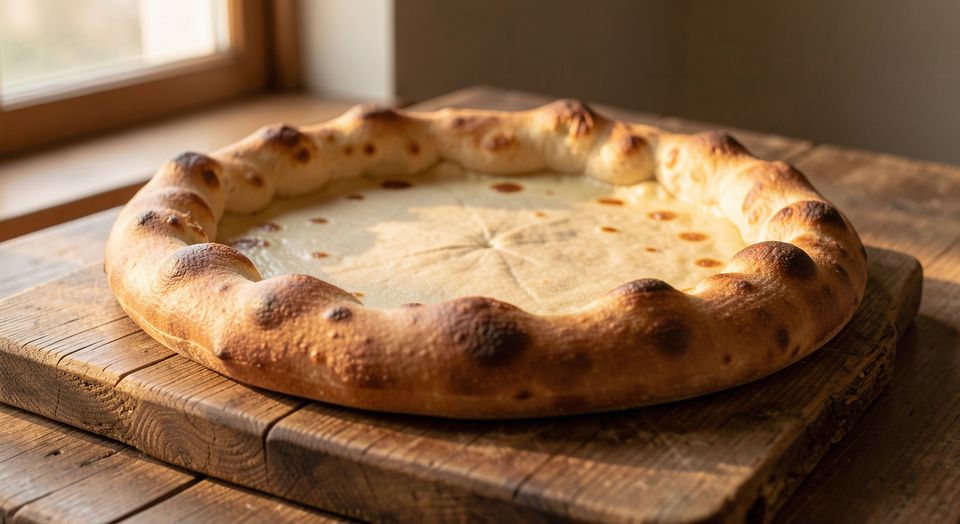
Quick and Blistered Pizza Dough Without Yeast or Baking Powder
Pizza dough without yeast or baking powder bakes into a blistered, golden crust in 22 minutes, with a sizzling rim worth every stubborn stretch.
 Pizza Dough
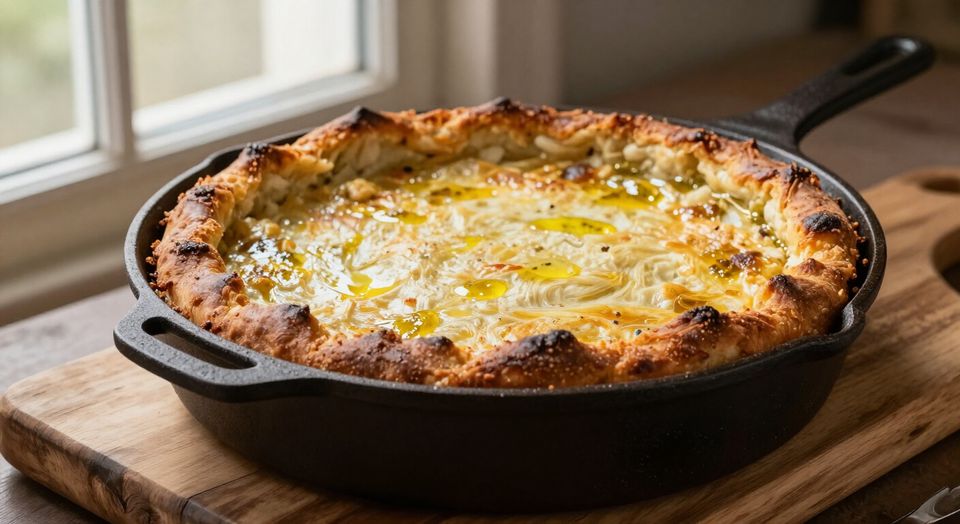
Thick Crust Pizza Dough Recipe for a Blistered Pan Pizza
Thick crust pizza dough recipe for a crispy, blistered pan pizza ready in 43 minutes. Bake yours tonight with our easy cast-iron method.