
Chewy Blistered Authentic Italian Pizza Dough Recipe From Scratch
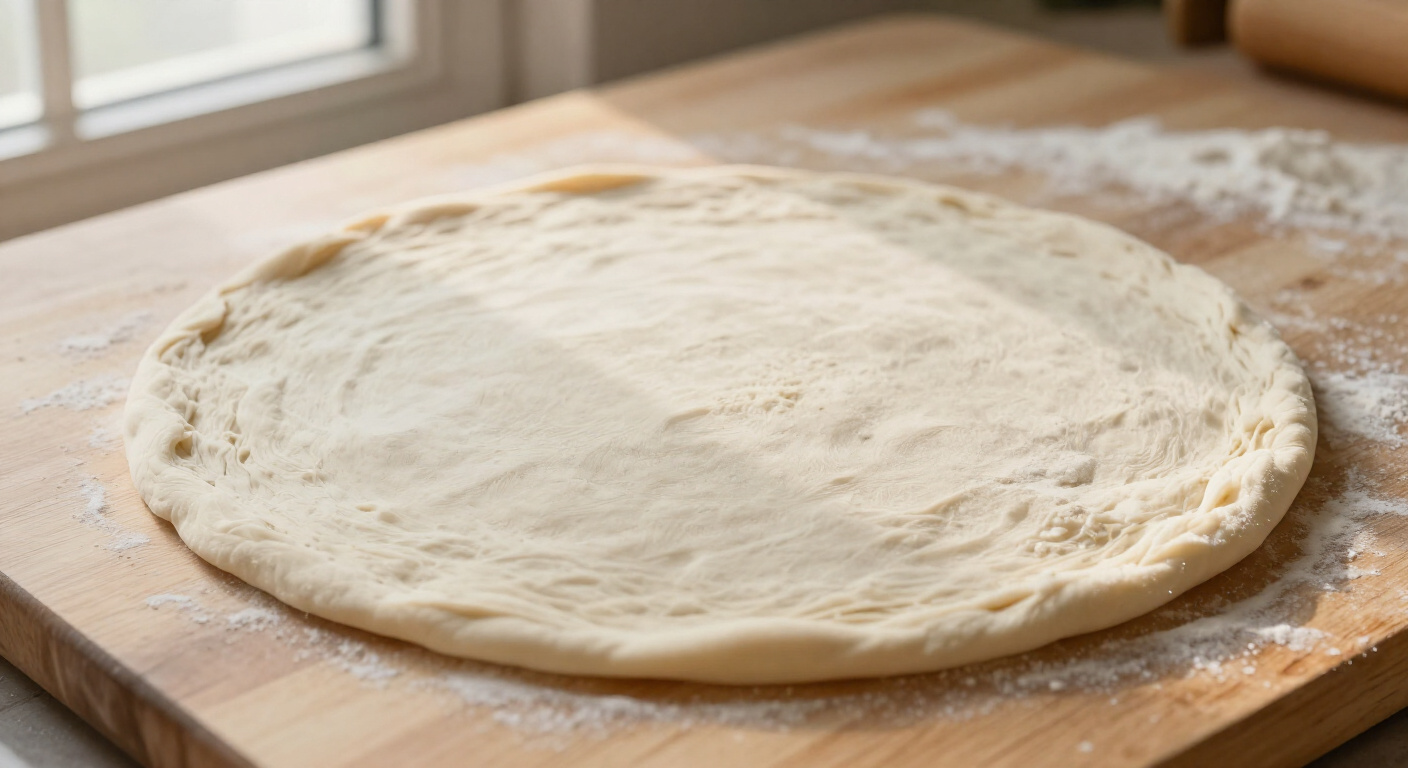
Italian pizza dough recipe for a puffy, blistered, chewy crust, ready in 28 minutes. Make it from scratch and taste the difference tonight.
This italian pizza dough recipe gives you a crust that puffs golden-brown, blisters loudly, and smells like warm bread. Italian 00 flour and a patient rest make it chewy and airy, in just 28 minutes of hands-on work. I fire up our oven almost every Friday, and this dough is my go-to for a crowd gathered around the table.
Why This Recipe Works
• Kneading on a wooden board builds gluten structure: The board grips the sticky dough so your hands can work it into a smooth, elastic network. That network traps gas and holds the bubbles that puff up in the oven.
• Shaping balls creates surface tension for rising: A taut, tight skin keeps each rested ball from slumping flat. It also channels gas upward, giving you a lighter, more open crumb.
• Resting balls relaxes gluten for easy stretching: Thirty to forty-five minutes lets the dough loosen, so it stretches without snapping back. Puffy, pillowy balls that spring back slowly are your cue they're ready.
• Fingertip stretching keeps the rim thicker: Working from the centre outward leaves the edge full and airy while the middle stays thin. That contrast is what gives you a crisp base with a blistered, golden border.
Ingredients You'll Need
Italian "00" Pizza Flour: This finely milled Italian flour gives the dough its structure and that chewy, airy bite. The same flour dusts your board, so keep a little handy while you knead. No 00 on hand? Bread flour adds more chew, and all-purpose flour gives a softer, less blistered crust.
Lukewarm Water: Around 35°C is warm enough to wake the yeast without scalding it. It also hydrates the flour into a sticky dough you can work. Filtered water warmed to the same temperature works well, but avoid cold water, which slows the rise.
Fine Sea Salt: Salt tightens the gluten and balances the flour's flavour, so the crust tastes like more than plain bread. It also slows the yeast a little, which gives the flavour time to build. Fine table salt is a good swap; weigh it, since salt varies by volume.
Instant Dry Yeast: These tiny granules are the engine behind the puffy rise you're waiting for. Instant yeast mixes straight into the flour, so there's no separate proofing step. Active dry yeast works in the same amount, but dissolve it in the warm water first so it wakes fully.
Extra-Virgin Olive Oil: A tablespoon of oil softens the dough and makes it easier to stretch later. It adds a gentle, fruity note and helps the dough keep its moisture during the long rise. A light olive oil or neutral oil like canola will work, with a milder flavour.


How to Make It (Step by Step)
Shaggy, sticky flour and water turn into smooth, springy dough by hand, then rest into thin, stretchy rounds. Even if your first batch feels stubborn, you'll get the hang of its silky stretch by round two.

- Whisk the 500 g (about 4 cups) Italian "00" pizza flour, 10 g (about 2 teaspoons) fine sea salt, and 3 g (about 1 teaspoon) instant dry yeast in a large bowl for 30-60 seconds at room temperature (70°F / 21°C). The mix should look pale, fine, and evenly powdery.

- Pour in the 325 ml (about 1⅓ cups) lukewarm water, around 35°C (95°F), and the 15 ml (1 tablespoon) extra-virgin olive oil. Stir with a wooden spoon for 1-2 minutes at room temperature (70°F / 21°C) until a shaggy, sticky dough forms and the bowl holds no loose powder.

- Turn the dough onto a lightly floured wooden board and knead for 8-10 minutes at room temperature (70°F / 21°C). It will feel stubborn at first. Keep going until it turns smooth, elastic, and springs back when pressed.

- Place the dough in a lightly oiled bowl, cover with a clean towel, and let it rise for 1-1.5 hours at 75°F (24°C). It is ready when it has doubled in size and looks puffy and airy.

- Punch the dough down gently and divide it into equal portions. Shape each piece into a tight ball on a lightly floured board for 4-6 minutes at room temperature (70°F / 21°C). Each ball should feel smooth and taut on the outside.

- Rest the balls on a lightly floured tray for 30-45 minutes at room temperature (70°F / 21°C). They are ready when they look puffy, feel pillowy, and spring back slowly when pressed.

- Gently stretch each ball with your fingertips into a thin round, keeping the edge slightly thicker. Work for 3-4 minutes at room temperature (70°F / 21°C) until the centre is thin, even, and stretchy.

Recipe Notes
• Storage: Keep leftover dough in an oiled, airtight container in the fridge for up to 2 days. Freeze balls wrapped in oiled cling film for 3 months. Thaw overnight in the fridge, then rest 1 hour at room temperature.
• Key substitution: Bread flour is the best stand-in for Italian 00 flour. Your crust will be a little chewier and less delicate, but it still blisters beautifully.
• Make-ahead tip: Shape the dough into balls, then refrigerate them covered for up to 24 hours. Pull them out an hour before stretching so they soften and relax again.
• Common mistake: Adding too much flour when the dough feels sticky is the usual culprit. Dust lightly, and trust the kneading to firm it up. A slightly tacky dough makes a lighter crust.
Serving size: 1 portion · Calories: 280 · Total Fat: 6g · Saturated Fat: 1g · Carbs: 48g · Fiber: 2g · Sugar: 1g · Protein: 9g · Sodium: 690mg
Tips and Tricks
- Equipment: Use a large, wide bowl. The dough nearly doubles, so it needs room to puff. A large bowl lets it rise without pressing against the sides.

- Temperature precision: Keep the water near 35°C (95°F). Warm, not hot. Water much hotter than that can stress the yeast and slow your rise.
- Common mistake: Rolling the dough out with a pin. A rolling pin presses out the gas you built during the rest. Stretch with your fingertips to keep the bubbles and the airy rim.
- Flavour upgrade: Brush the rounds with olive oil. Before topping, brush each stretched round with a little extra-virgin olive oil. It adds a richer, fragrant golden edge.
- Texture tip: Keep the centre thin and the rim full. Stretch only until the middle is thin and even. A thin centre crisps, while the puffy rim blisters and turns golden.

Frequently Asked Questions
Can I use all-purpose flour or gluten-free flour instead of Italian 00 flour in this dough?
All-purpose flour works well as a swap, so use 500 g of it with the same water, though the crust will be a bit less delicate. For gluten-free, a 1:1 blend such as 500 g of gluten-free baking flour with 1 teaspoon xanthan gum added will work, but expect a softer, more crumbly base.
How do I reheat leftover baked pizza so the crust stays crisp?
Wrap cooled slices in foil or an airtight container and refrigerate for up to 3 days. Reheat them in a dry skillet over medium heat for 2-3 minutes, covered, then uncover for 1 minute to re-crisp the base.
Why does my dough keep snapping back when I stretch it into a round?
Tight, elastic gluten needs more time, so cover the balls and rest them 15 more minutes at room temperature. Stretch again once they look puffy and only slowly spring back when pressed, rather than fighting you.
What to Serve With This
- Lemony Arugula Salad: Peppery leaves tossed in lemon juice and olive oil cut through the rich, golden crust with a bright, sharp bite.
- Creamy White Bean Dip: Silky and mild, it offers a smooth contrast to the crisp, blistered edges and a soft, savory spoonful for each slice.
- Marinated Olives: Briny, salty bites add a punchy, savory note that lifts the dough's warm, bready flavour.
- Sautéed Broccoli Rabe: Slightly bitter, tender greens give a bold, earthy counterpoint to the chewy, airy centre of the crust.

Chewy Blistered Authentic Italian Pizza Dough Recipe From Scratch
Dinner / Italian
- Prep
- 20 min
- Cook
- 8 min
- Total
- 28 min
- Servings
- 4
- Calories
- 280 kcal
Ingredients
- 500 g (about 4 cups) Italian "00" pizza flour, plus extra for dusting
- 325 ml (about 1⅓ cups) lukewarm water, around 35°C
- 10 g (about 2 teaspoons) fine sea salt
- 3 g (about 1 teaspoon) instant dry yeast
- 15 ml (1 tablespoon) extra-virgin olive oil
Instructions
- Whisk the 500 g (about 4 cups) Italian "00" pizza flour, 10 g (about 2 teaspoons) fine sea salt, and 3 g (about 1 teaspoon) instant dry yeast in a large bowl for 30-60 seconds at room temperature (70°F / 21°C). The mix should look pale, fine, and evenly powdery.
- Pour in the 325 ml (about 1⅓ cups) lukewarm water, around 35°C (95°F), and the 15 ml (1 tablespoon) extra-virgin olive oil. Stir with a wooden spoon for 1-2 minutes at room temperature (70°F / 21°C) until a shaggy, sticky dough forms and the bowl holds no loose powder.
- Turn the dough onto a lightly floured wooden board and knead for 8-10 minutes at room temperature (70°F / 21°C). It will feel stubborn at first. Keep going until it turns smooth, elastic, and springs back when pressed.
- Place the dough in a lightly oiled bowl, cover with a clean towel, and let it rise for 1-1.5 hours at 75°F (24°C). It is ready when it has doubled in size and looks puffy and airy.
- Punch the dough down gently and divide it into equal portions. Shape each piece into a tight ball on a lightly floured board for 4-6 minutes at room temperature (70°F / 21°C). Each ball should feel smooth and taut on the outside.
- Rest the balls on a lightly floured tray for 30-45 minutes at room temperature (70°F / 21°C). They are ready when they look puffy, feel pillowy, and spring back slowly when pressed.
- Gently stretch each ball with your fingertips into a thin round, keeping the edge slightly thicker. Work for 3-4 minutes at room temperature (70°F / 21°C) until the centre is thin, even, and stretchy.
Share this article
About the author

Daniela Ruiz
Daniela built the pizza oven with her father the summer before he got sick, and she has lit it almost every Friday since. The fire is where she goes to be close to him. The dough is stubborn, the crust is blistered and loud, and she would not trade one night of it.