
Blistered Crispy Gluten Free Pizza Crust Recipe From Scratch
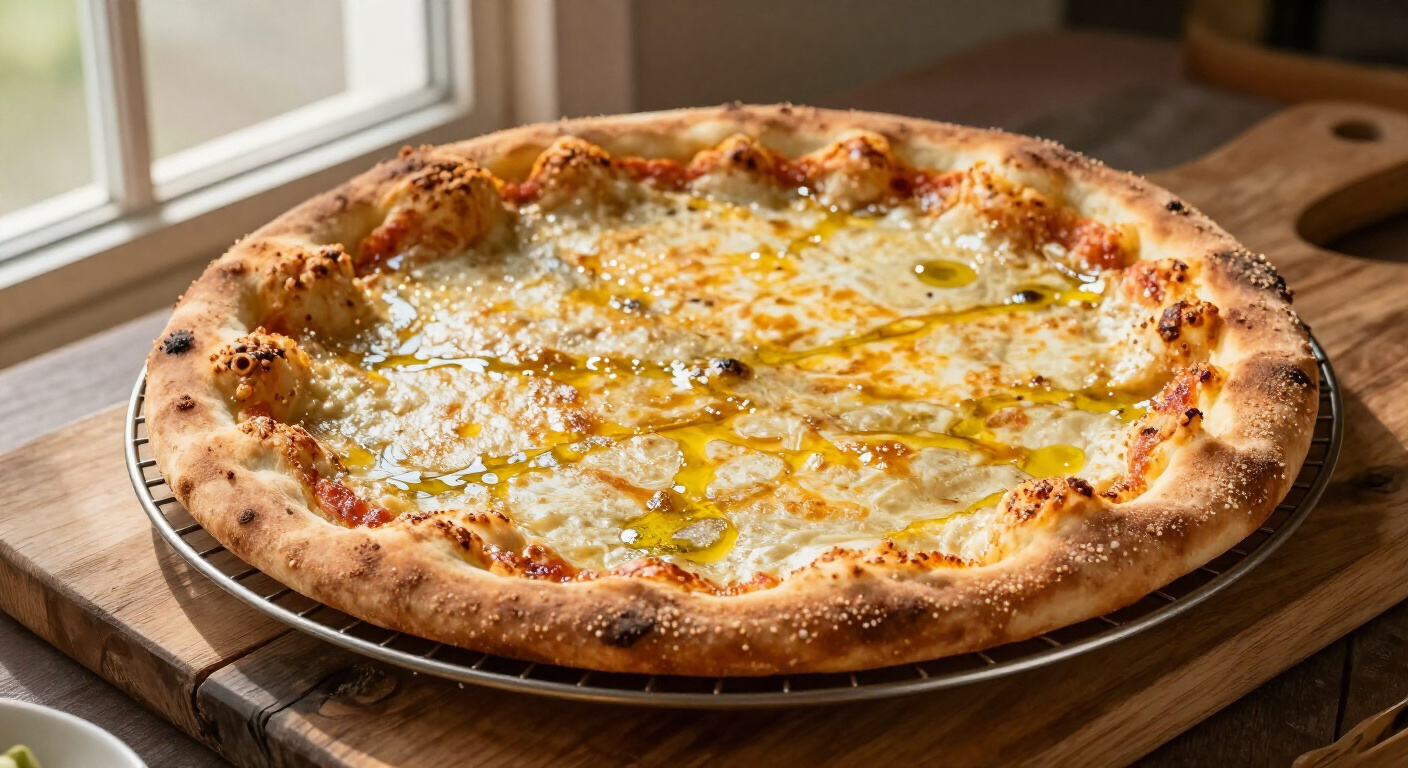
Gluten free pizza crust recipe that bakes up blistered, crackly and chewy in 32 minutes. Make Friday pizza night from scratch, no crumbly crust.
This gluten free pizza crust recipe bakes up blistered, golden-brown and loudly crackly, with just 32 minutes of hands-on work. It's chewy, never crumbly, and sturdy enough for Friday pizza night with the whole crew.
Psyllium husk and xanthan gum mimic gluten's stretch, while a 500°F stone and quick par-bake set the base fast, so this dough blisters loudly instead of slumping into a pale, soggy disc.
Ingredients You'll Need
Brown Rice Flour: This is the hearty base of the dough, milled from whole brown rice. It gives a nutty, toasty flavor and the sturdy structure that keeps the crust from flopping. Sorghum flour is the best swap, with a similar mild sweetness and weight.
Tapioca Starch: This silky white powder comes from cassava root. It gives the crust its chew and helps the rim puff into blistered bubbles. Arrowroot works in a pinch, though the chew will be a touch softer.
Potato Starch: It's a fine, squeaky starch, and it's not the same as potato flour. It keeps the inside of the crust tender and light while the outside crackles. Cornstarch is the closest stand-in.
Psyllium Husk Powder: This fiber-rich powder is the secret to a dough you can actually press and shape. It holds water and acts like gluten's stretchy cousin. Ground flaxseed can sub in, but expect a denser, slightly speckled crust.
Xanthan Gum: It's a tiny but mighty binder that keeps the crust from crumbling apart. Paired with psyllium, it gives that pull-apart chew you crave. Use extra psyllium husk if you don't have it, about another ½ teaspoon.
Instant Yeast: These fast-acting granules don't need proofing first. They give the dough its gentle rise and that warm, bready aroma. Active dry yeast works too, but bloom it in the warm water for 5 minutes first.
Granulated Sugar: Just a spoonful feeds the yeast so it wakes up fast. It also nudges the crust toward deeper golden-brown freckles in the oven. Honey or maple syrup are easy swaps.
Fine Sea Salt: Salt makes the whole crust taste like real pizza, not cardboard. It sharpens the nutty rice flour and keeps the yeast in check. Use table salt if needed, but go a pinch lighter.
Warm Water: Bathwater-warm water wakes up the yeast and hydrates every starch. Too cool and the rise stalls, too hot and the yeast quits. Warm milk works for a softer, richer crust.
Extra-Virgin Olive Oil: Some goes into the dough and the rest gets brushed over the top. It brings fruity flavor and helps the rim turn glossy and crackly. Avocado oil is the best neutral swap.
Apple Cider Vinegar: A splash of tang lifts the flavor and softens the crumb. It also gives the yeast a little boost for a lighter rise. Fresh lemon juice works just as well.
Fine Cornmeal: Cornmeal dusts the peel so your dough slides onto the stone with one shake. It adds a gritty, toasty crunch underneath too. Extra brown rice flour works, but the slide won't be quite as smooth.


How to Make It (Step by Step)
This dough comes together in one bowl, takes a cozy rise, then gets pressed onto a cornmeal-dusted peel and baked on a scorching stone until golden and blistered. Even if gluten free dough has fought you before, this one is forgiving, and you'll pull out a crackly, fragrant crust on your very first try.

- Whisk the brown rice flour, tapioca starch, potato starch, psyllium husk powder, xanthan gum, instant yeast, sugar and fine sea salt in a large bowl. Keep going until the mix looks evenly pale with no streaks, about 1 minute at room temperature (70°F / 21°C). This is your gluten free pizza dough's backbone, so don't rush it.

- Pour in the warm water, 2 tablespoons of the olive oil and the apple cider vinegar. Stir hard with a sturdy spatula until a thick, sticky, smooth dough forms, 2 to 3 minutes. Your water should feel bathwater warm (105 to 110°F / 40 to 43°C). It'll look more like stiff batter than bread dough. That's exactly right.

- Cover the bowl with plastic wrap and let it rise somewhere cozy. Wait until the dough looks puffy and noticeably risen, 30 to 45 minutes at 75 to 80°F (24 to 27°C). Patience here buys you a lighter, airier crust.

- Meanwhile, set a pizza stone on the lower rack and preheat the oven. Heat until the stone is scorching and the air shimmers when you open the door, 45 to 60 minutes at 500°F (260°C). A truly hot stone is what makes the bottom crackle.

- Dust a pizza peel with the fine cornmeal. Tip the dough onto it and press it out with oiled fingers into a 12-inch round. Leave a slightly thicker rim, about 10 minutes at room temperature (70°F / 21°C). The dough will feel soft and tacky but should hold its shape.

- Brush the remaining 1 tablespoon of olive oil over the dough, paying extra love to the rim. Keep brushing until the whole surface looks glossy and evenly coated, about 1 minute at room temperature (70°F / 21°C).

- Slide the round onto the hot stone with one confident shake. Par-bake until it's puffed, set and freckled with pale golden spots, 5 to 6 minutes at 500°F (260°C). This is the moment the kitchen starts smelling like Friday night.

- Keep baking until the crust turns deep golden-brown and blistered. The rim should sound hollow when tapped, another 5 to 7 minutes at 500°F (260°C). Loud, crackly, gorgeous.

- Slide the crust onto a wire rack to rest. Let it cool until the bottom firms up and crackles, 3 to 5 minutes at room temperature (70°F / 21°C). This short rest keeps your gluten free pizza crust recipe crisp, not steamy.

Par-baked crusts keep three days chilled or three months frozen; reheat on a hot stone. Swap potato starch for cornstarch, mix dry ingredients weeks ahead, and never add extra flour to sticky dough.
Serving size: 1 portion · Calories: 380 · Total Fat: 9g · Saturated Fat: 1.5g · Carbs: 70g · Fiber: 4g · Sugar: 1g · Protein: 5g · Sodium: 720mg
Tips and Tricks
- Equipment: Use a pizza stone and a wooden peel: A thick stone soaks up heat and blasts it straight into the base. That's how you get a loud, crackly bottom. A cornmeal-dusted peel lets the soft dough glide on in one shake, no tearing.

- Temperature precision: Give the stone the full 45 to 60 minutes at 500°F (260°C): The oven dial beeps long before the stone is ready. A half-hot stone bakes a pale, bready crust. Wait until the air shimmers when you open the door. Then you'll hear that gorgeous sizzle.
- Common mistake: Pressing the dough with dry hands: This dough is tacky and stubborn. Dry fingers grab it, drag it and rip holes in your round. Oil your fingertips and press gently from the center out. Re-oil whenever it starts to cling.
- Flavour upgrade: Whisk dried oregano into the dry mix: Add 1 teaspoon with the flours and starches. It toasts in the hot oven and smells like a little Italian kitchen. Every bite of the rim gets a fragrant, herby whisper.
- Texture tip: Always rest the crust on a wire rack: Straight off the stone, the bottom is full of steam. On a cutting board, that steam goes soggy. A wire rack lets air flow underneath, so the base firms up and crackles in 3 to 5 minutes.

Frequently Asked Questions
Can I make this gluten free pizza dough egg-free or without psyllium husk?
The dough is already egg-free and dairy-free, so it suits vegans as written. If you can't find psyllium, replace the 2 teaspoons with 1 tablespoon ground flaxseed mixed into the warm water, or add ½ teaspoon extra xanthan gum, though the crust will be slightly less chewy.
How should I store and reheat leftover slices of topped gluten free pizza?
Wrap cooled slices airtight and refrigerate up to 3 days, or freeze them individually for up to 1 month. Reheat straight from the fridge or freezer on a preheated 450°F (230°C) stone for 5 to 8 minutes, until the cheese bubbles and the bottom crackles again.
Why did my gluten free pizza crust come out pale and soggy underneath?
Your stone probably wasn't hot enough, so give it the full 45 to 60 minutes at 500°F (260°C) and slide the dough on with one quick shake. Look for a puffed, set base freckled with pale golden spots after the 5 to 6 minute par-bake, then let it rest on a wire rack so steam can't soften the bottom.
What to Serve With This
- Lemony Arugula Salad: Peppery greens in a sharp lemon vinaigrette cut right through that rich, olive-oil-glossed crust and wake up every bite.
- Creamy Burrata with Fresh Basil: A soft, velvety burrata spooned beside each loud, crackly wedge gives you the creamy-meets-crunchy contrast I crave on Friday nights.
- Tangy Marinated Cucumber Salad: Cool, crisp cucumbers in a bright vinegar splash feel refreshing next to the deep golden-brown, blistered rim straight from the hot stone.
- Roasted Tomato Basil Soup: A smooth, fragrant bowl of sweet-tart tomato soup is perfect for dunking that hollow-sounding, chewy edge.

Blistered Crispy Gluten Free Pizza Crust Recipe From Scratch
Dinner / Italian
- Prep
- 20 min
- Cook
- 12 min
- Total
- 32 min
- Servings
- 4
- Calories
- 380 kcal
Ingredients
- 1 ½ cups (210 g) brown rice flour
- ¾ cup (90 g) tapioca starch
- ½ cup (60 g) potato starch
- 2 teaspoons psyllium husk powder
- 1 teaspoon xanthan gum
- 2 ¼ teaspoons (1 packet) instant yeast
- 1 teaspoon granulated sugar
- 1 ¼ teaspoons fine sea salt
- 1 ¼ cups warm water (105–110°F), about bathwater warm
- 3 tablespoons extra-virgin olive oil, divided
- 1 teaspoon apple cider vinegar
- 2 tablespoons fine cornmeal, for dusting the peel
Instructions
- Whisk the brown rice flour, tapioca starch, potato starch, psyllium husk powder, xanthan gum, instant yeast, sugar and fine sea salt in a large bowl. Keep going until the mix looks evenly pale with no streaks, about 1 minute at room temperature (70°F / 21°C). This is your gluten free pizza dough's backbone, so don't rush it.
- Pour in the warm water, 2 tablespoons of the olive oil and the apple cider vinegar. Stir hard with a sturdy spatula until a thick, sticky, smooth dough forms, 2–3 minutes. Your water should feel bathwater warm (105–110°F / 40–43°C). It'll look more like stiff batter than bread dough. That's exactly right.
- Cover the bowl with plastic wrap and let it rise somewhere cozy. Wait until the dough looks puffy and noticeably risen, 30–45 minutes at 75–80°F (24–27°C). Patience here buys you a lighter, airier crust.
- Meanwhile, set a pizza stone on the lower rack and preheat the oven. Heat until the stone is scorching and the air shimmers when you open the door, 45–60 minutes at 500°F (260°C). A truly hot stone is what makes the bottom crackle.
- Dust a pizza peel with the fine cornmeal. Tip the dough onto it and press it out with oiled fingers into a 12-inch round. Leave a slightly thicker rim, about 10 minutes at room temperature (70°F / 21°C). The dough will feel soft and tacky but should hold its shape.
- Brush the remaining 1 tablespoon of olive oil over the dough, paying extra love to the rim. Keep brushing until the whole surface looks glossy and evenly coated, about 1 minute at room temperature (70°F / 21°C).
- Slide the round onto the hot stone with one confident shake. Par-bake until it's puffed, set and freckled with pale golden spots, 5–6 minutes at 500°F (260°C). This is the moment the kitchen starts smelling like Friday night.
- Keep baking until the crust turns deep golden-brown and blistered. The rim should sound hollow when tapped, another 5–7 minutes at 500°F (260°C). Loud, crackly, gorgeous.
- Slide the crust onto a wire rack to rest. Let it cool until the bottom firms up and crackles, 3–5 minutes at room temperature (70°F / 21°C). This short rest keeps your gluten free pizza crust recipe crisp, not steamy.
Share this article
About the author

Daniela Ruiz
Daniela built the pizza oven with her father the summer before he got sick, and she has lit it almost every Friday since. The fire is where she goes to be close to him. The dough is stubborn, the crust is blistered and loud, and she would not trade one night of it.