
Blistered Self Rising Flour Pizza Dough Crust Recipe
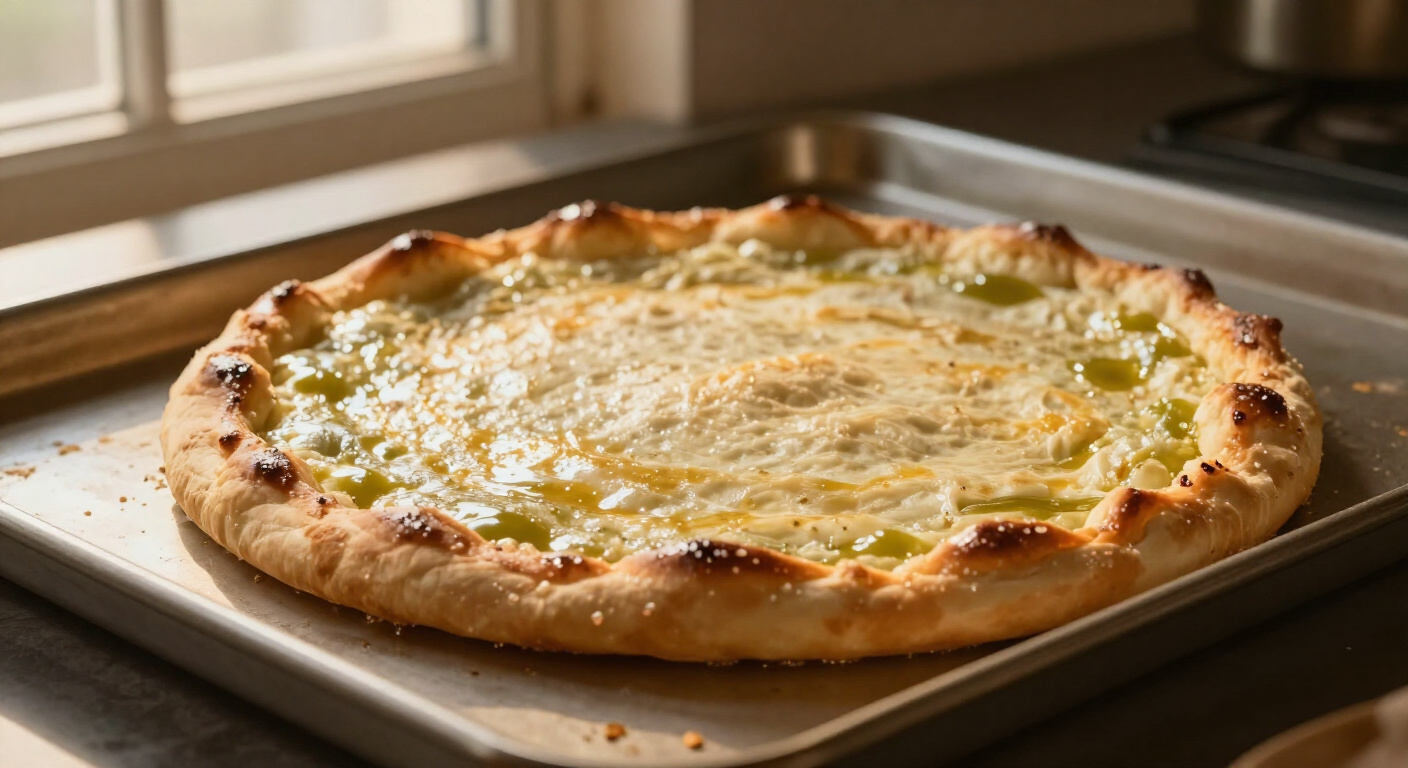
Self rising flour pizza dough bakes into a crisp, blistered crust in just 25 minutes with no yeast or proofing. Try this loud, golden recipe tonight!
Self rising flour pizza dough hits a hot oven and sizzles, puffing into golden, blistered edges smelling like toasted bread. In about 25 minutes you get a loud, crisp crust with no yeast, no proofing, and no waiting around. Make it on a Friday night when you want something loud, warm, and shared around the table.
Why This Recipe Works
• Greek yogurt keeps the dough supple: The yogurt's fat and gentle acidity relax the gluten, so the dough stays soft, velvety, and easy to stretch.
• Built-in leavening lifts the crust: Self-rising flour already contains baking powder and salt, which release gas in the oven's heat for a light, airy rim.
• Preheated sheet mimics a pizza stone: The hot metal sears the base from below, so the bottom crisps quickly while the top stays tender.
• Short rest relaxes stubborn dough: Resting lets the gluten loosen, so the round stretches thin without snapping back toward the middle.
Ingredients You'll Need
Self-Rising Flour: This is the base of the whole crust, and it already has baking powder and salt mixed in. That built-in lift means no yeast and no proofing, so the dough comes together fast. If you don't have it, use 1 cup all-purpose flour with 1½ teaspoons baking powder and ¼ teaspoon salt.
Plain Full-Fat Greek Yogurt: This is what keeps the dough soft and stretchy instead of stiff. Its fat and gentle tang relax the gluten, so you can shape it without a fight. If you're out, plain full-fat sour cream is the closest swap, though the dough will be a little richer and softer.
Extra-Virgin Olive Oil: You only need one tablespoon, brushed around the outer edge before baking. It gives the rim a glossy, golden color and a rich, fruity flavor. A neutral oil like avocado oil works if you want less olive flavor, though the crust will taste a little different.


How to Make It (Step by Step)
It's a quick, hands-on process: mix, knead, rest, and stretch the dough into a thin round. Then it slides onto a blazing-hot pan and bakes into a loud, golden-brown crust.

- Preheat the oven with a rimmed baking sheet on the middle rack until the sheet is hot and the oven holds steady, 20-25 minutes at 475°F / 245°C. Keep the door closed so the heat stays put.

- Stir 2 cups (250 g) self-rising flour and 240 g room-temperature Greek yogurt in a large bowl until a shaggy, tacky dough forms, 2-3 minutes at 70°F / 21°C. Scrape the bowl sides so no dry flour hides at the bottom.

- Knead the dough on a lightly floured surface until smooth, springy, and only slightly tacky to the touch, 3-4 minutes at 70°F / 21°C. Add flour one pinch at a time if it sticks to your fingers.

- Shape the dough into a ball, place it in a round bowl, and cover it with a clean towel to rest until relaxed and easy to stretch, 10-15 minutes at 70°F / 21°C.

- Stretch the rested dough by hand into a thin, even round on a lightly floured surface until the edges are slightly thicker and the surface feels smooth, 3-5 minutes at 70°F / 21°C.

- Brush the outer edge of the round with about 1 tablespoon extra-virgin olive oil until glossy and lightly coated, about 1 minute at 70°F / 21°C. Keep a little oil back for later.

- Bake the crust on the hot baking sheet until golden-brown with blistered, puffed edges, 8-10 minutes at 475°F / 245°C. Slide it onto the hot sheet carefully so the bottom stays flat.

Recipe Notes
• Storage: Wrap leftover dough tightly and refrigerate it up to two days. It freezes well for three months. Thaw overnight in the fridge, then reheat baked crusts in a 400°F oven for four to five minutes.
• Key substitution: Out of self-rising flour? Use two cups all-purpose flour, plus two teaspoons baking powder and half a teaspoon salt. Sift them together first.
• Make-ahead tip: Mix the dough up to one day ahead and keep it covered in the fridge. Let it sit at room temperature for thirty minutes before stretching.
• Common mistake: Scooping flour straight from the bag packs it in, making the dough dry and stubborn. Spoon the flour into the cup and level it off.
Serving size: 1 portion · Calories: 260 · Total Fat: 6g · Saturated Fat: 1.5g · Carbs: 42g · Fiber: 2g · Sugar: 3g · Protein: 11g · Sodium: 610mg
Tips and Tricks
- Equipment: Preheat a heavy rimmed baking sheet: Thick metal holds heat evenly, so the bottom sears fast. A thin sheet warps and cools the crust.

- Temperature precision: Hold the oven at 475°F / 245°C: Let it preheat fully for 20-25 minutes with the door shut. A cooler oven leaves the crust pale and soft instead of blistered.
- Common mistake: Pressing the rim flat: Stretching the whole round evenly kills the puff. Keep the outer edge slightly thicker and stretch only the center.
- Flavour upgrade: Garlic oil for the rim: Stir a pinch of garlic powder into the olive oil before brushing. The edge bakes fragrant and deep golden.
- Texture tip: Thin center, thick puffed rim: Stretch the middle thinner than the edge so the center crisps while the rim balloons. Keep the surface smooth so blisters form evenly.

Frequently Asked Questions
Can I substitute Greek yogurt or olive oil in self rising flour pizza dough?
Swap the 1 cup Greek yogurt for 1 cup plain whole-milk yogurt, or use 1 cup dairy-free coconut yogurt for a vegan version. For the 1 tablespoon olive oil, use 1 tablespoon melted butter or avocado oil, though the crust will taste slightly different.
Can I freeze stretched, unbaked pizza crusts and bake them straight from frozen?
Yes. Stack stretched, oil-brushed rounds with parchment between them, freeze up to one month, then bake on the hot sheet at 475°F for 10-12 minutes without thawing.
Why is my self rising flour pizza dough dry, tough, or stubborn to stretch?
The flour was likely packed in, so spoon it into the cup and level it off. If the dough still feels stiff, knead in a teaspoon of yogurt or water until it's smooth and only slightly tacky.
What to Serve With This
- Greek Side Salad: Crisp cucumber, tomato, and red onion tossed in lemon juice and oregano cut through the richness of the cheesy, savory pizza.
- Lemony Arugula Salad: Peppery greens dressed with bright lemon and shaved Parmesan add a fresh, sharp bite that balances the warm, blistered crust.
- Creamy Burrata with Tomatoes: Soft, milky burrata and ripe tomato slices offer a silky, cool contrast to the crisp, crackly edges of the pizza.
- Marinated Olives and Pickled Peppers: Briny, tangy olives and sharp pickled peppers add a zesty counterpoint that lifts every bite of the golden, chewy crust.

Blistered Self Rising Flour Pizza Dough Crust Recipe
Dinner / Italian
- Prep
- 15 min
- Cook
- 10 min
- Total
- 25 min
- Servings
- 4
- Calories
- 260 kcal
Ingredients
- 2 cups (250 g) self-rising flour, spooned and leveled, plus extra for dusting
- 1 cup (240 g) plain full-fat Greek yogurt, room temperature
- 1 tablespoon extra-virgin olive oil, plus more for brushing
Instructions
- Preheat the oven with a rimmed baking sheet on the middle rack until the sheet is hot and the oven holds steady, 20-25 minutes at 475°F / 245°C. Keep the door closed so the heat stays put.
- Stir 2 cups (250 g) self-rising flour and 240 g room-temperature Greek yogurt in a large bowl until a shaggy, tacky dough forms, 2-3 minutes at 70°F / 21°C. Scrape the bowl sides so no dry flour hides at the bottom.
- Knead the dough on a lightly floured surface until smooth, springy, and only slightly tacky to the touch, 3-4 minutes at 70°F / 21°C. Add flour one pinch at a time if it sticks to your fingers.
- Shape the dough into a ball, place it in a round bowl, and cover it with a clean towel to rest until relaxed and easy to stretch, 10-15 minutes at 70°F / 21°C.
- Stretch the rested dough by hand into a thin, even round on a lightly floured surface until the edges are slightly thicker and the surface feels smooth, 3-5 minutes at 70°F / 21°C.
- Brush the outer edge of the round with about 1 tablespoon extra-virgin olive oil until glossy and lightly coated, about 1 minute at 70°F / 21°C. Keep a little oil back for later.
- Bake the crust on the hot baking sheet until golden-brown with blistered, puffed edges, 8-10 minutes at 475°F / 245°C. Slide it onto the hot sheet carefully so the bottom stays flat.
Share this article
About the author

Daniela Ruiz
Daniela built the pizza oven with her father the summer before he got sick, and she has lit it almost every Friday since. The fire is where she goes to be close to him. The dough is stubborn, the crust is blistered and loud, and she would not trade one night of it.